
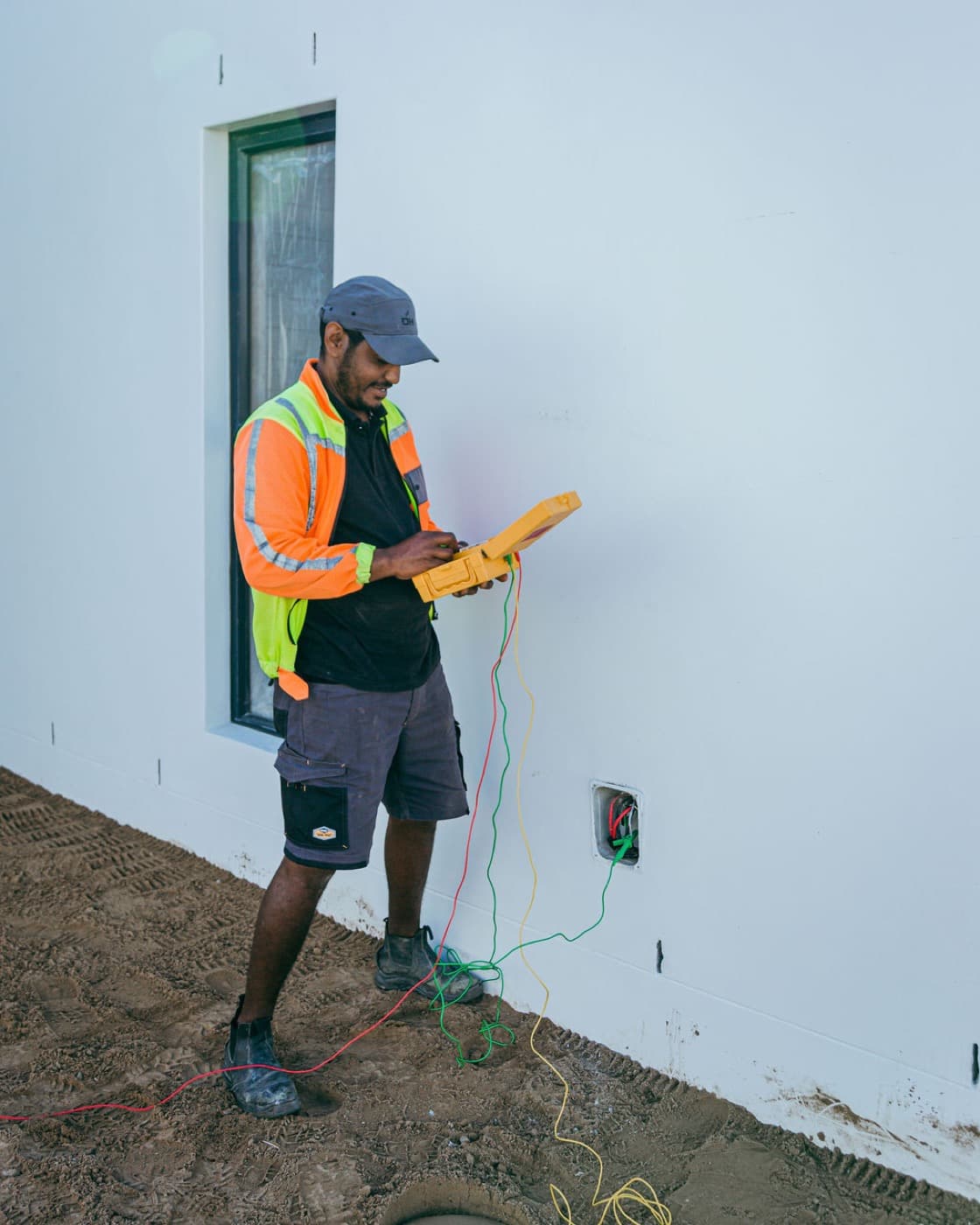
Most expensive electrical corrections begin as small planning decisions made before the ceilings close and the finishes go in.
Electrical planning must happen early
The electrical layout affects walls, ceilings, joinery, waterproofing and almost every finished room. When decisions are delayed, the electrician is forced to route cables around completed work or place points where they are easiest rather than where they are useful.
A proper plan starts with furniture, appliances, lighting, security, data, solar and future loads. It should be reviewed before chasing begins and again before ceilings close. A few hours spent checking the drawings can prevent days of patching and rework.
Too few plug points
Extension leads often reveal that plug positions were decided without considering how the room will work. Kitchens need points for fixed and portable appliances. Bedrooms need practical access around beds. Living spaces now carry televisions, routers, chargers, workstations and cleaning equipment.
The answer is not to cover every wall with sockets. Mark the equipment and furniture first, then place enough points on suitable circuits. Outdoor plugs, garage equipment and pool areas need the right protection and weather rating rather than an indoor point extended through a wall later.
Circuits that carry too much
A circuit can become overloaded when several high-demand appliances are grouped together to save cable or DB space. The problem may only appear after occupation, when cooking, heating and cleaning happen at the same time.
Dedicated circuits should be planned for loads that require them, and general circuits should reflect realistic use. The cable, breaker and connection method must be coordinated. Increasing a breaker rating to stop trips is not a solution if the cable was not designed for that current.
A DB layout nobody can follow
A crowded or poorly labelled DB slows every future repair. Circuits should be arranged logically, identified clearly and leave practical access for testing. Protection must suit the circuit and the installation should allow safe isolation of sections without unnecessary disruption.
New builds should also leave sensible capacity for known future additions. A DB packed on handover day gives the next electrician few good options for solar, air-conditioning, an EV charger or an outbuilding. Capacity planning is cheaper before the board is ordered.
Earthing and compliance cannot be left for handover
Earthing, bonding and protective devices are part of the installation from the start. They cannot be treated as paperwork to sort out after the finishes are complete. Missing conductors, inaccessible joints and incorrect materials become harder to correct once walls and ceilings are closed.
Testing at useful stages catches problems while the work is still visible. Final testing remains essential, but it should confirm a controlled installation rather than discover months of hidden defects. Records and labels also need to match what was actually built.
Lighting that looks right on paper but not in the room
Downlights placed on a neat grid can miss worktops, artwork and furniture. Decorative fittings can clash with beams, cupboards or ceiling details. Exterior lighting may create glare while leaving paths and entrances dark.
Review lighting against the final room layout and ceiling plan. Decide where switching, dimming and two-way control are needed before wiring. Drivers, transformers and smart controls must remain accessible for maintenance instead of being sealed into a ceiling void.
No allowance for what comes next
A renovation is the best time to plan routes for solar, inverter backup, an EV charger, a second geyser or garden equipment, even if the equipment will be installed later. A spare conduit and an organised DB can avoid cutting through finished work in a few years.
GJS reviews drawings, loads and site conditions before first fix, then tests through the project and at handover. Bring the electrical contractor into the programme early enough to coordinate with the builder, ceiling team, plumber and joiner. That is where clean electrical work begins.
Site changes also need a controlled approval path. Moving a cupboard, appliance or partition can affect plugs, isolators and lighting that were already set out. Record the change on the electrical drawing and confirm it before the team installs cable. Verbal changes made between trades are a common source of points ending up behind joinery or too close to plumbing.
Before occupation, walk through the property with the final circuit schedule and room layout. Test switching from the positions people will use, check appliance isolators and confirm that access panels remain reachable. Handover is easier when practical use is checked alongside the electrical test results.