
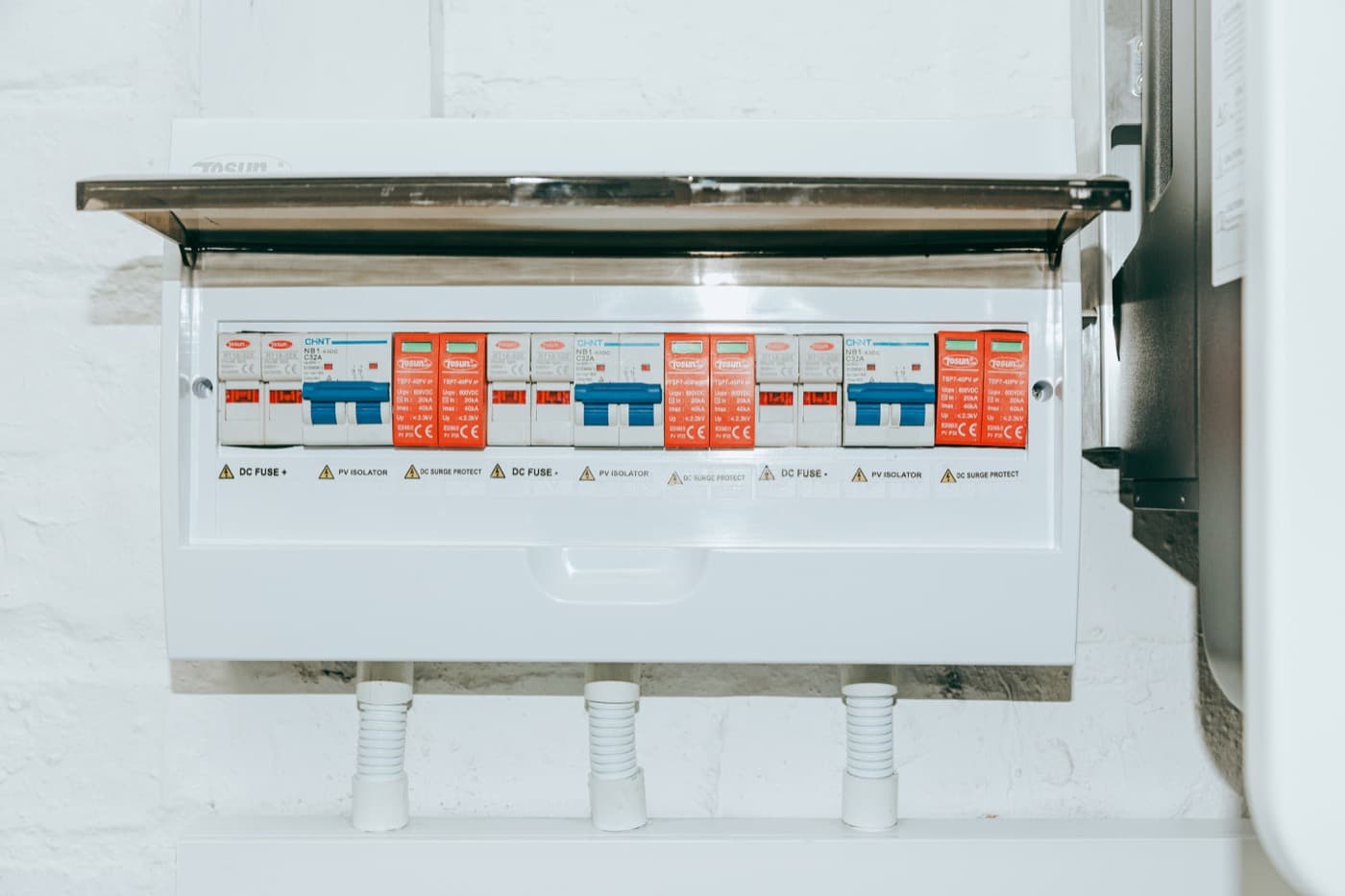
A breaker that keeps tripping is doing a job. The important part is finding out whether the cause is the load, an appliance or a fault in the installation.
Start with the pattern
A DB board trip is not a fault by itself. A breaker or earth leakage device opens the circuit because it has detected a condition it is designed to protect against. Resetting it repeatedly without finding the cause can hide a problem and make later testing more difficult.
Notice what was running, which switch moved to the off position and whether the trip happened immediately or after a few minutes. That pattern gives an electrician a useful starting point. Do not remove the DB cover or touch internal wiring. The checks a homeowner can do safely should stay outside the board.
Too much load on one circuit
An overloaded circuit is common in kitchens, garages and older homes where several high-load appliances share a limited number of circuits. A kettle, heater, microwave and air fryer may each work correctly, but running them together can push the circuit beyond the breaker rating.
The breaker may trip after the appliances have been on for a while because heat builds as the current stays high. Moving one appliance to another plug does not always solve it if both plugs are on the same circuit. Proper testing identifies the circuit and confirms whether the cable and breaker are correctly matched.
Short circuits and earth leakage faults
A short circuit normally causes a fast, decisive trip. Damaged insulation, a loose conductor, a failed fitting or wiring pinched during building work can allow conductors to make contact where they should not. This needs testing before the circuit is energised again.
Earth leakage trips when current is escaping from its intended path. That can come from an appliance, moisture, damaged wiring or an insulation fault. If the main earth leakage device trips, switch off and unplug portable appliances before one careful reset. If it trips again, leave it off and arrange fault finding.
A faulty appliance can trip the whole house
Geysers, washing machines, dishwashers, pool pumps, fridges and outdoor equipment can develop faults that only appear when a heating element or motor starts. The appliance may seem fine while idle and then trip the DB during a particular part of its cycle.
A useful observation is whether the power stays on when a specific appliance is unplugged. This is not a repair, but it helps narrow the search. Fixed appliances such as geysers and ovens should be isolated and tested by an electrician because their circuits cannot be assessed safely by unplugging a lead.
Moisture, damaged wiring and power interruptions
Cape Town rain can expose problems in outdoor lights, garden plugs, pumps, roof spaces and weathered junction boxes. Water does not need to flood a fitting to cause trouble. Condensation or a small leak can lower insulation resistance enough for earth leakage protection to operate.
Trips can also show up after load shedding or a supply interruption when several appliances restart together. That does not automatically mean a surge damaged the DB. It may reveal a weak appliance, a loose connection or a circuit that was already close to its limit. Testing is the only reliable way to separate those causes.
When to call an electrician
Call for electrical fault finding when a breaker will not reset, trips repeatedly, feels unusually hot, makes noise or has a burning smell. The same applies when lights flicker, plugs show heat damage or a trip follows rain or building work. Keep the affected circuit off until it has been checked.
GJS tests the circuit, connected equipment, earth leakage operation and insulation before recommending repair work. The aim is to find the cause, not replace parts until the trip stops. Send a photo of the DB and a short note about what was running when the fault appeared to help us prepare for the visit.
Avoid holding a breaker in position, fitting a larger breaker or bypassing earth leakage protection. Those actions remove the warning without removing the fault. If the trip has left part of the property without power, use battery lighting and keep extension leads away from wet areas while you wait for the circuit to be tested.