
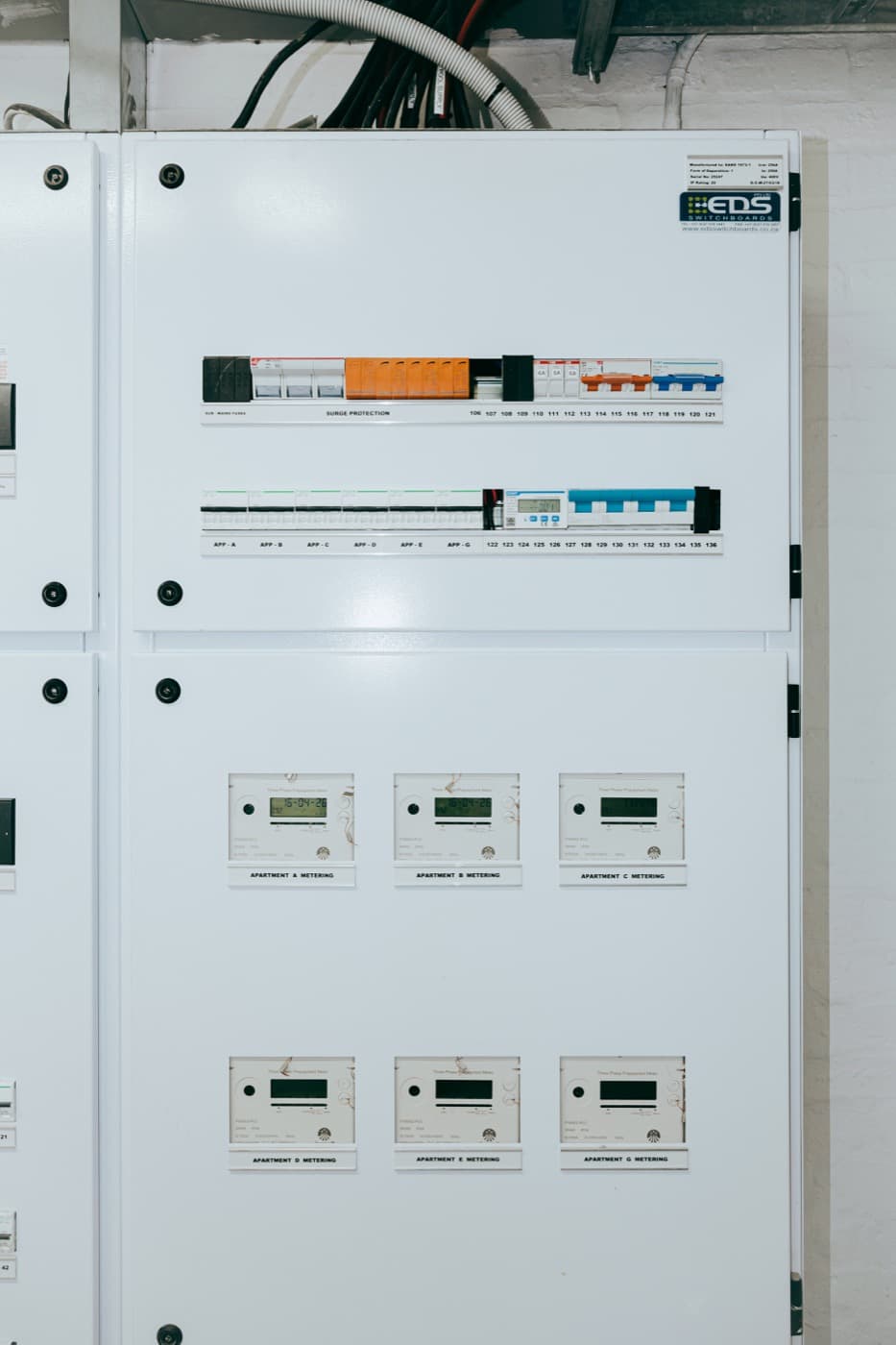
A DB board upgrade is not about making the board look newer. It is about protection, condition, capacity and whether the installation still suits the property.
The DB is the control point for the installation
The distribution board receives the electrical supply and divides it into protected circuits. Breakers, earth leakage protection, isolators and labels allow faults to be contained and parts of the installation to be switched safely.
A board does not need replacement simply because it is old. It needs assessment when its equipment, enclosure, wiring or capacity no longer provides suitable protection and control. An electrician should test the installation before deciding whether repair, reconfiguration or full replacement is justified.
Old fuse boxes and obsolete equipment
Older fuse boards can remain in properties that have changed significantly since they were installed. Replacement fuses and components may be difficult to match, labels may be missing and later additions may have been squeezed into separate boxes nearby.
An upgrade can bring the circuits into one organised board with modern protection and clear identification. The existing wiring still needs testing. A new DB cannot make damaged or non-compliant field wiring acceptable, so remedial work may extend beyond the enclosure.
Frequent trips need diagnosis first
Repeated tripping can point to overload, an appliance fault, damaged wiring or a protection problem. Replacing the DB without testing may leave the actual fault untouched. The trip pattern and circuit test results should guide the work.
Where the board is overcrowded, poorly arranged or fitted with unsuitable breakers, an upgrade may form part of the solution. Where one appliance is faulty, replacing the whole board would be unnecessary. Good fault finding separates those situations.
Heat, noise and visible damage
A breaker or connection that becomes hot can indicate overload, a loose termination or failing equipment. Buzzing, discolouration, a burning smell and melted plastic need prompt attention. Switch off the affected circuit if it is safe to identify and arrange an inspection.
Do not tighten connections or remove the DB cover yourself. Parts inside may remain live even when individual breakers are off. An electrician can isolate the supply, inspect the terminations and use test equipment to identify heat damage and the cause behind it.
Missing or unsuitable earth leakage protection
Earth leakage protection is a critical part of a residential installation. Older boards, undocumented alterations or incorrect circuit arrangements can leave protection missing or difficult to test. A test button alone does not prove that the complete installation is correctly protected.
The electrician checks device operation, circuit allocation, earthing and the measured results. If the board cannot accommodate the required arrangement cleanly, replacement may be the practical way to restore proper protection and labelling.
Renovations, major appliances and solar
An extension, new oven, second geyser, heat pump, air-conditioning system, EV charger or workshop can change the load and circuit requirements. Adding equipment to a full board through small enclosures and improvised links creates a difficult installation to operate and maintain.
Solar and inverter work also needs suitable isolation, protection, essential-load circuits and clear labelling. The existing board may be reusable, but that should be confirmed during design. Planning the DB with the new system avoids duplicating work later.
COC, insurance and future capacity
Compliance testing during a property sale or insurance repair can expose board defects that have been present for years. Correcting them before a deadline gives the owner more control over the scope and cost. Keep certificates and schedules updated after alterations.
GJS can inspect and test the board, explain which defects require attention and plan capacity for upcoming loads. Send a clear photo of the closed DB, the property details and a list of equipment being added. The final recommendation should be based on the installation, not age alone.
A typical upgrade may include a new enclosure, correctly rated breakers, earth leakage protection, main isolation, neutral and earth arrangements, labels and space for approved future circuits. The exact scope comes from testing the existing cables and supply. It should also state which surrounding defects must be repaired before the upgraded board can be certified.
Ask for a circuit schedule that another electrician can understand. Clear labels save time during a fault and help occupants isolate the right circuit in an emergency. They also make later solar, renovation and maintenance work less disruptive because the electrical layout is no longer a guessing exercise.